| |
Shaping the Future of Transportation
|
| |
|
| |
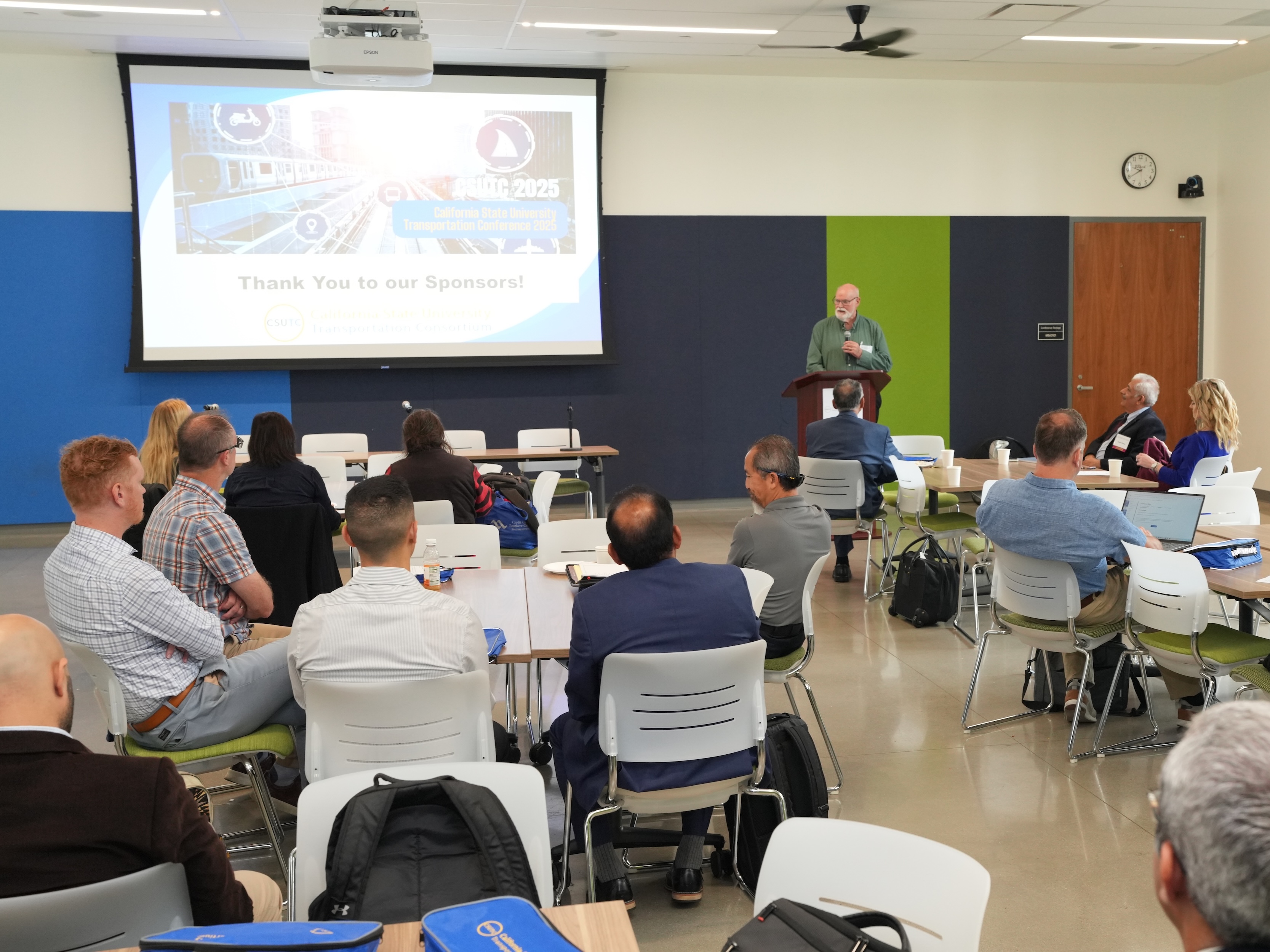
The California State University Transportation Consortium (CSUTC) proudly hosted CSUTC 2025: Shaping the Future of Transportation at California State University, Long Beach. The two-day event brought together researchers, students, industry leaders, and policymakers from across California and beyond to showcase new research and build partnerships dedicated to advancing a safe, efficient, and sustainable transportation future.
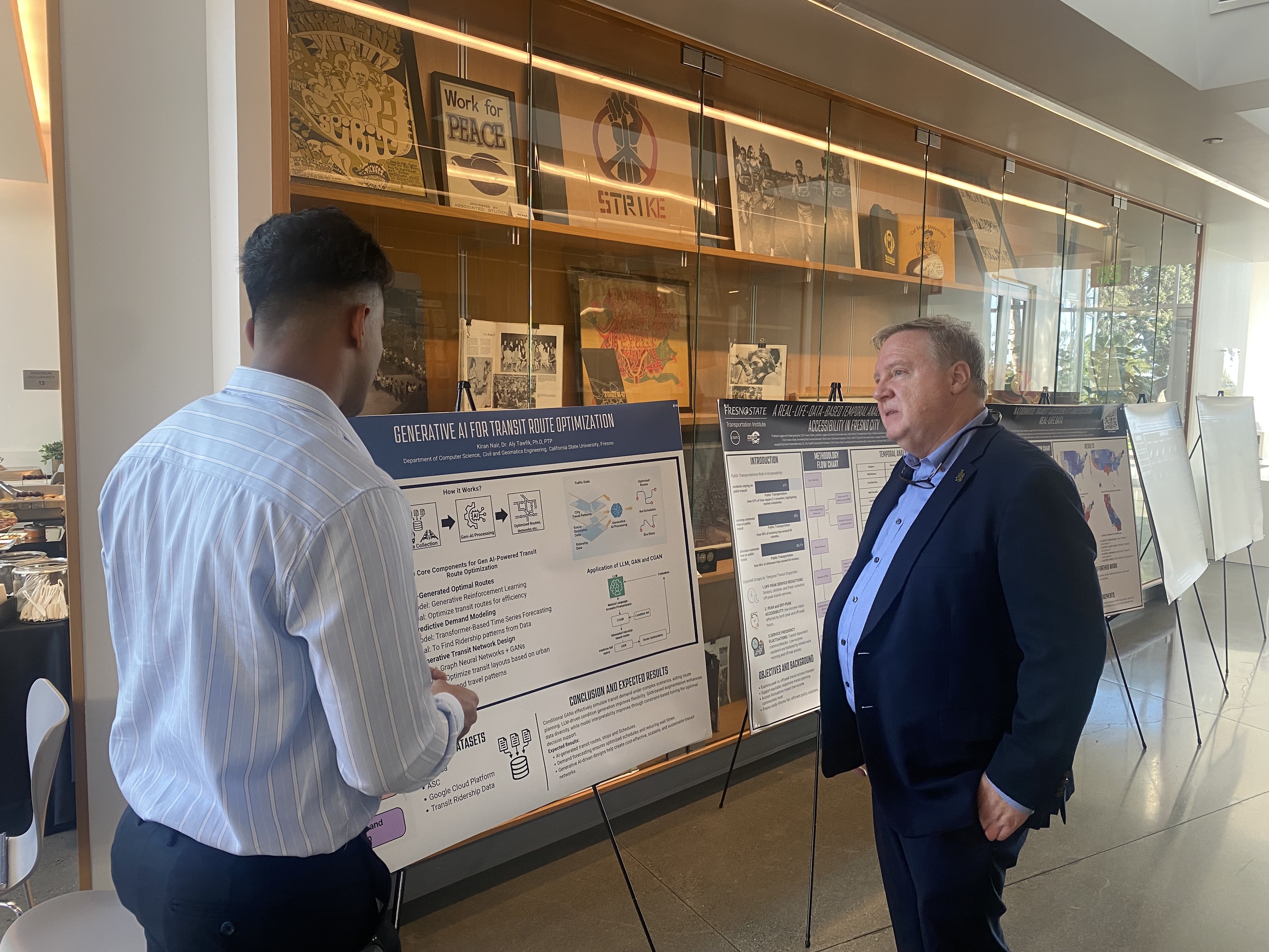
Anchored by the Mineta Transportation Institute at San José State University, the California Pavement Preservation Center at CSU Chico, the Fresno State Transportation Institute at CSU Fresno, and the Center for International Trade and Transportation and College of Engineering at CSU Long Beach, CSUTC engages faculty and students across all 23 CSU campuses. This year’s program featured keynote speaker Hon. Jim Beall, former California State Senator and Chair of the Committee on Transportation and Housing, along with panels on transportation readiness for the 2028 Olympics, artificial intelligence in transportation research, and strategies for developing the future workforce. Attendees also participated in technical sessions and poster presentations showcasing innovative CSU research.
We extend our sincere thanks to everyone who joined us at CSUTC 2025 to exchange knowledge and strengthen partnerships. Together, we are shaping the future of transportation for California and the nation.
|
| |
|
| |
Research Assistant Spotlight
|
| |
|
| |
 Earlier this summer, Mission San Jose High School senior Padma Balaji completed a workshop through Mosaic, an independent journalism program at San José State University, to write an article about how women and youth are most affected by harassment on Bay Area transit. She approached this piece with extensive knowledge of the issue from her experience working as a Research Assistant for Dr. Asha Weinstein Agrawal on the project Documenting and Combatting Transit Passenger Harassment: An Analysis of SB434 Data, which analyzes data collected by the ten largest California transit agencies to understand the extent of street harassment experienced by their passengers.
“As I was working, I was inspired to report on this issue for the journalism program I was doing, specifically focusing on how young women of color experienced harassment,” explained Padma. “I had the pleasure of speaking with BART about its Not One More Girl campaign, which was created to end harassment and specifically focused on the experiences of young women. I loved working on this project, and had the opportunity to have it published in the Mercury News and KALW!” Padma’s article was published in the San Jose Mercury News, but she has not stopped since then. Padma is also one of the student organizers planning a Bay Area Youth Climate Summit, an all-day event packed with panels and activities that connect youth with a broader network of activists and educational opportunities—happening in San Francisco next month.
Thank you for all your hard work, Padma! We can’t wait to see what you do next!
|
| |
|
| |
|
|
| |
Developing an Integrated Risk Assessment Framework to Quantify the Resilience of Critical Railway Infrastructure: Characterization of Risks and Hazards to the U.S. Rail Network Through Empirical Data and Past Events
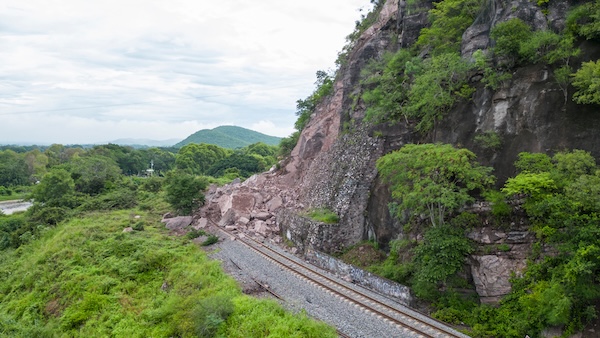
A new MTI-led Climate Change and Extreme Events Training and Research (CCEETR) Program has created the first dataset mapping natural hazards to specific U.S. railway segments. By combining data from the U.S. Geological Survey, NOAA, and the National Weather Service with rail accident cause codes, researchers were able to estimate both the location and economic cost of hazard-related damage.
Between 2000 and 2023, hazard-linked derailments caused millions in track damage—$43 million from floods and up to $85 million from extreme heat. The project establishes a foundation for a national rail-hazard database that can be expanded with industry data, offering valuable insights to inform policy, planning, and rail system resilience.
|
| |
|
|
| |
|
| |
|
|
| |
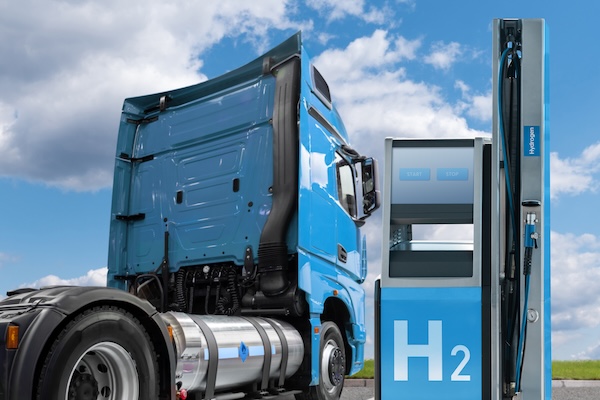
Hydrogen Fuel Cell Application for Port Drayage Truck: Integrated Transportation and Energy Modeling
A new MTI-led California State University Transportation Consortium study explores the potential of hydrogen fuel cell electric vehicles (FCEVs) for port drayage, which involves short-haul trucking to and from ports. Using second-by-second data from 38 diesel trucks in Southern California, researchers simulated FCEV performance and found an average hydrogen consumption of 0.15 kilograms per mile. They then evaluated the cost of hydrogen under different production methods, station capacities, and fleet adoption scenarios.
The findings show that greater station utilization significantly reduces hydrogen costs, especially for blue hydrogen, though very high usage may require costly infrastructure upgrades. In contrast, underused stations result in higher costs, particularly for green hydrogen. Liquid hydrogen delivery is more cost-effective at lower demand levels, while gaseous delivery is better suited for high-demand fleets. While grey hydrogen is currently the least expensive to produce, green hydrogen—especially from solar-wind electrolysis—can become competitive at scale. The study underscores the importance of strategic infrastructure planning and clean hydrogen investment to support the future of FCEV drayage.
|
| |
|
|
| |
|
| |
|
|
| |
Understanding Residential Development in a High-Quality Transit Area (HQTA): An Application of Deep Learning
This study examines how residential development near transit varies between vacant and occupied properties, using deep learning and regression models in Los Angeles County. Findings show that property-level characteristics matter more than neighborhood-level ones in both cases, but play a stronger role in vacant lot development. Infill on occupied lots is more common in core cities, while inner suburbs see less development of either type. Occupied lot projects are typically linked to nearby amenities and urban functions, whereas vacant lot development tends to occur in quieter areas with fewer amenities near transit.
These results highlight the importance of tailoring transit-oriented development strategies by property type and underscore the value of nuanced, data-driven approaches to guide urban growth around transit hubs.
|
| |
|
|
| |
|
| |
|
|
| |
From Paris to Madrid: What Great Stations Teach Us
Thursday, September 4, 2025
Join MTI for an inside look at lessons learned from a recent San José State University study trip to Spain and France—home to some of the most celebrated high-speed rail systems and stations in the world. Through first-hand student experiences and expert perspectives, this event explores how great stations seamlessly connect intercity rail services with safe spaces for walking and biking and anchor vibrant urban neighborhoods that power regional economies.
This session will examine what makes these stations thrive: the governance structures that keep them running smoothly, innovative strategies to futureproof them against tomorrow’s challenges, and the art of building public trust through strategic engagement. Don’t miss this opportunity for exciting discussion and actionable inspiration to transform mobility in your own community.
Featured Guest:
- Dakota Gross, Senior Planner, LSA Associates, Inc.; SJSU MS in Transportation Management (MSTM) Student
- Alex Kenefick, Chief, Integration and Network Planning Branch, Caltrans; MSTM Alum ('17)
- Inmaculada Mohino, PhD, Associate Professor, Universidad Politécnica de Madrid
- Fabrice Morenon, PhD, Managing Director, SNCF Hubs & Connexions
Moderator: Eric Eidlin, Station Planning Manager, City of San José Department of Transportation; MSTM Instructor
This webinar is co-sponsored by APTA High-Speed & Intercity Passenger Rail Committee, CRISI: Promoting Railroading Careers and Developing the Current Rail Industry Workforce, High Speed Rail Alliance, SJSU Institute for Metropolitan Studies, and US High Speed Rail Association.
*1 PDH credit available.
|
| |
|
|
| |
|
|
|